


Most HVAC and plumbing companies already have the buyers for their maintenance plan sitting in the service history: people who paid once, liked the work, and were never asked for anything again. When a plan fails to sell, it is usually because the offer on paper does not match the service the company can deliver, or because nobody asked in a clear, unhurried way.
The order below is the one I’d run it in if it were my shop. The plan and the price come first, then who to ask, then the conversation itself, from the first sentence on the service call to the first visit on the calendar.
Quick answer: what it takes to sell an HVAC maintenance agreement well
Selling maintenance agreements runs in seven steps, in this order: write down a plan your schedule can deliver, price it, pick the customers to ask first, ask on the right call, present what is covered and what stays billable, answer the objection, then close with the first visit booked. The first three steps take an afternoon, once. The conversation takes about 20 minutes on a service call.
One thing decides success: the offer has to match what the schedule can deliver. Promise two visits and priority dispatch, and the calendar has to hold two visits and reserved capacity, or the plan turns into cancellations by month eight. A good result is a signed agreement with every covered unit listed by serial number and a dated first visit on the board.
| Step | What happens | Time |
|---|---|---|
| 1. Build the plan | Visits, tasks, exclusions and reserved capacity, in writing | An afternoon, once |
| 2. Price it | Annual and monthly figure, second system, member discount | An hour, once |
| 3. Pick who to ask | Recent repairs, systems past warranty, past customers with no plan | An hour per list |
| 4. Ask on the right call | Name the problem, show the condition with photos and readings | 6 to 9 minutes |
| 5. Present the agreement | Covered units, visits, tasks, what stays billable, terms | 5 to 7 minutes |
| 6. Handle the objection | One real answer, then ask again | 2 to 4 minutes |
| 7. Close and schedule | Authorization, first visit on the calendar | 3 minutes |
Step 1: Build a plan your schedule can deliver
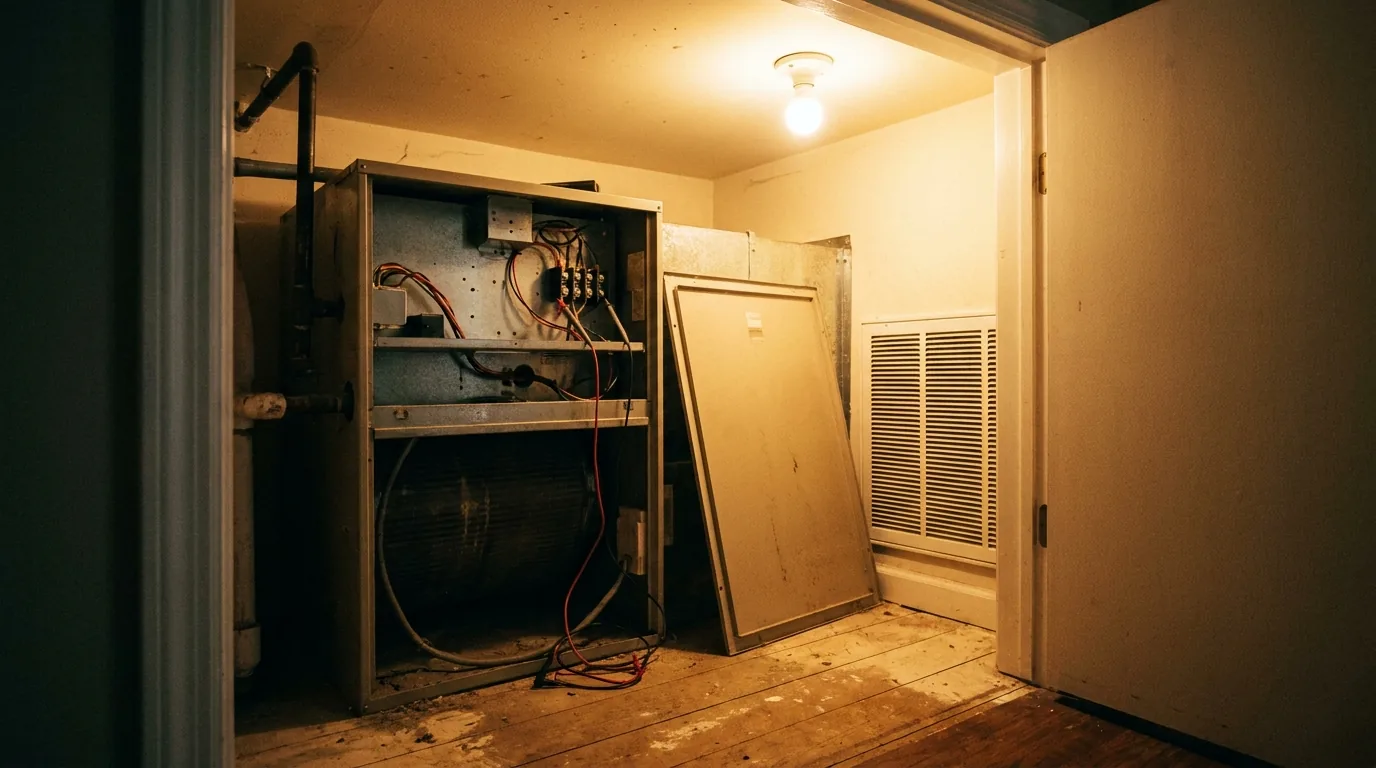
A maintenance plan is scheduled inspections of named equipment, a fixed task list per visit, documented readings, and a member benefit such as priority scheduling or a repair discount. Owners search for an HVAC maintenance agreement template or a PDF format because they want the shell. These pieces fill it. All of them have to exist in writing before anyone pitches.
Materials checklist
- Equipment inventory: type, manufacturer, model, serial number, install date or age, and known issues, per unit. It sets the scope you can price and deliver.
- Maintenance checklist: the tasks per visit and the readings recorded (temperature split, static pressure, voltage and amperage, superheat and subcooling). It is what the tech works from on visit day.
- The agreement form: covered locations and units, visit frequency, scope, exclusions, payment timing, renewal and cancellation language.
- An objection-response guide: four answers your team gives the same way every time.
- A CRM or service-record system: where the agreement, the asset records, the renewal date and the next visit live so fulfillment never depends on memory.
ENERGY STAR reports that two visits a year is the common structure because heating and cooling equipment benefits from a pre-season check-up before each demand peak.
Then check capacity. If a member call in July would sit behind a week of installs, fix the schedule before you sell a single plan.
Step 2: Price it so the plan pays for itself
Price the plan before anyone pitches it, and write it down so nobody quotes from memory. Put three figures on one sheet: the annual and monthly price per system, the price for a second system, and the member repair discount. If you sell tiers, add a one-page comparison with basic, preferred and premium side by side, so the customer sees what each tier changes.
Then check the price against what the customer would pay without it. Here is an example with round numbers: a $249 plan with two visits, a waived $89 diagnostic on plan calls, and 15 percent off repairs. Two tune-ups bought separately at $129 each run $258, so the plan is already even before anything breaks. Your techs will need this math in step 6, so put it on the sheet.
Step 3: Pick who to ask first
Your best buyers already trust your work, so start with the customers most likely to say yes:
- Customers you repaired in the last 12 months. They saw your tech and the result up close.
- Systems past their parts warranty years. Two visits a year make the clearest case on equipment that is starting to age.
- Past customers with no plan and no visit in a year or more. They are the biggest group and the one nobody calls.
Leave out systems at the end of their life and customers who just declined a large repair. Those customers need a replacement quote or some breathing room first.
If the plan already exists and nobody calls the list, that is the whole idea behind our Maintenance Plan Campaign: 30 days to your past customers by email and phone only, no printed mailer and no texting, with calls from your office using our script and call list or from us. You keep every signup.
Step 4: Ask on the right call, and lead with the problem
Timing carries as much weight as wording. A repair you just finished well is the best moment you get. A brand new installation, a failed inspection, or a call where you just delivered bad news are poor ones.
Open with the service event already on the table and leave the name of your club out of it. Words that work at the door or right after a repair: “The blower motor is running again. While I was in there I also found the coil loaded up, and that is the one thing I want to show you before I pack up.” A tech who opens with “have you heard about our Gold Comfort Club?” puts the customer on guard before the first sentence lands.
Then name the outcome the customer wants, whether that is fewer emergency calls in August, a system checked before the heat arrives or a known cost in place of a surprise one. Only after that does the agreement come up, as the way to get there.
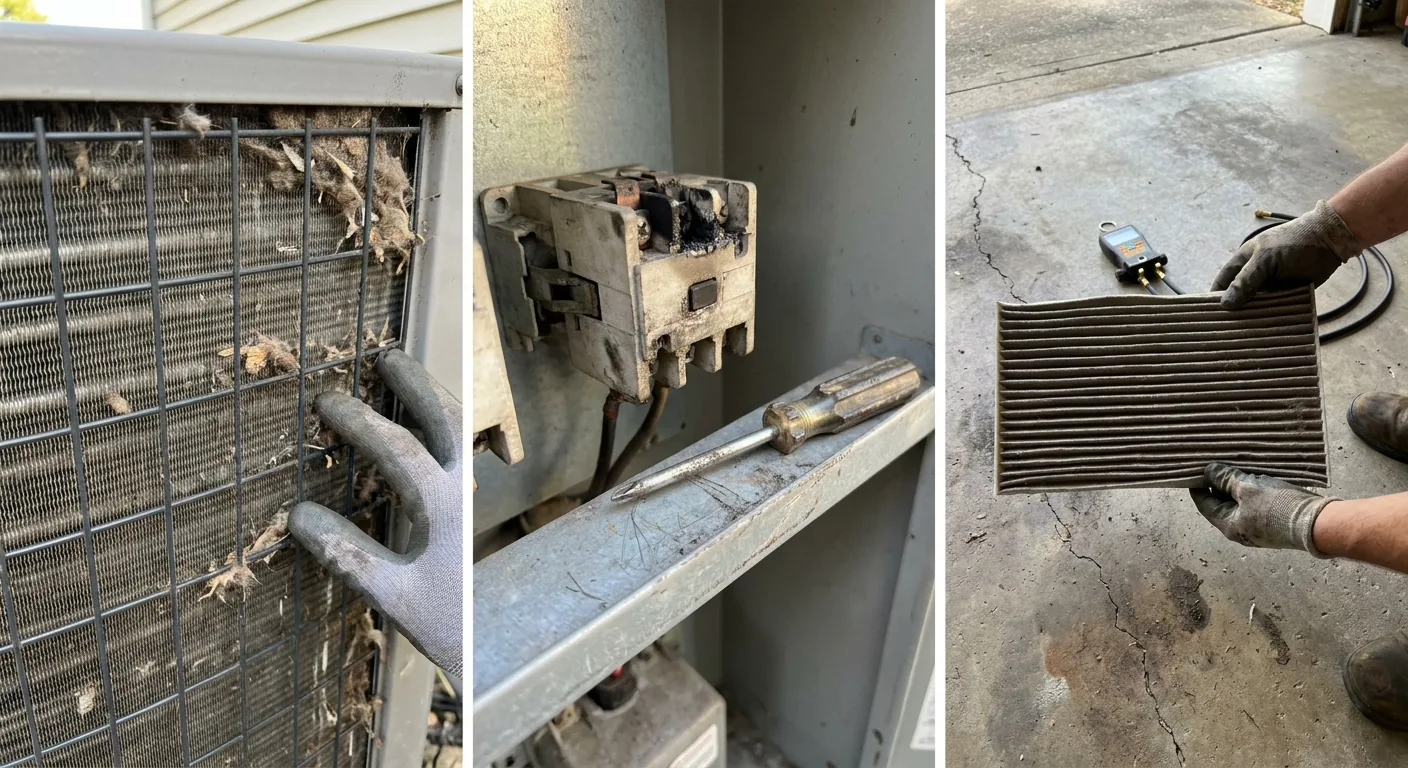
When a customer says “I’ll just call when it breaks,” the answer is a photo rather than an argument. Show the loaded coil, the pitted contactor, the filter you pulled and the readings you took, and let the condition make the point.
Give three pieces of evidence and nothing more. A photo of the component, the measurement, and one plain sentence that ends in a next step. “Your static pressure is high and the coil is coated, which is why the system works harder than it should. The next step is getting it checked before the season instead of after.” Restricted airflow is measurable, and it costs the customer money every month it goes unfixed.
The mistake here is leading with the offer, or making a claim with no reading behind it. Scare language your own measurements do not support costs you this sale and the next one.
Pro tip: The repair you just finished is the highest-trust moment you get, but only when the failure and the agreement are truly connected. Hand over the photos and readings with the offer, and tell the customer a second opinion is welcome. If today’s failure was a lightning-damaged board, scheduled visits would not have prevented it, and saying otherwise costs you belief in everything else you said.
Step 5: Present what the agreement includes and what it excludes
Read the agreement out loud in this order. Treat the exclusions as seriously as the inclusions.
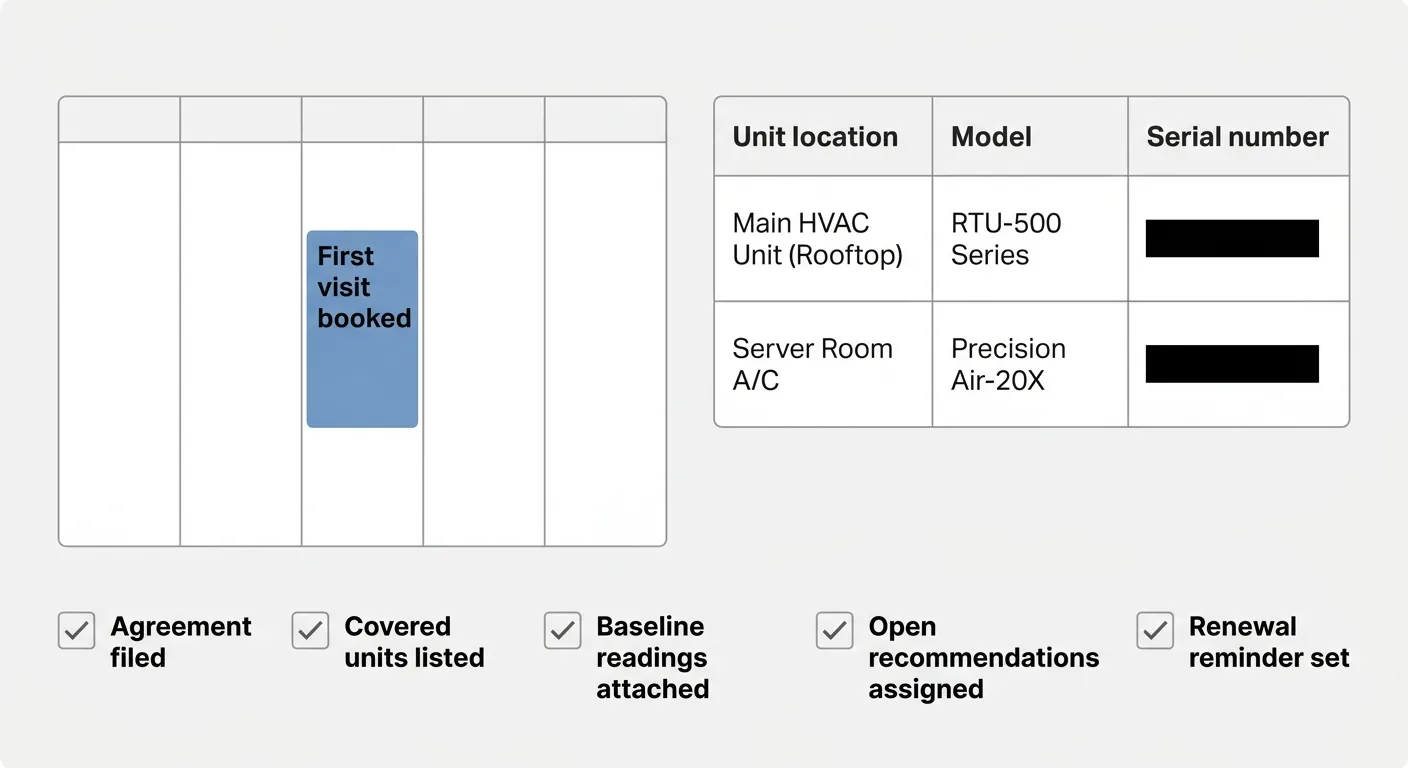
- Covered equipment. Each unit by make, model, serial number and location. Missing serial numbers cause most “I thought that one was covered” disputes.
- Visit count and timing. Spring cooling inspection, fall heating inspection, or a quarterly schedule on commercial units.
- Scope of work per visit. The task list itself, including which measurements get recorded. “Maintenance included” is not a scope.
- Priority language. Same-day dispatch, first available slot, or queue preference ahead of non-members. Pick one and write it.
- Exclusions. Parts, refrigerant, filters and belts past a stated allowance, after-hours labor, diagnostics on a separate call, and any repair found during the inspection.
- Payment, term and renewal. Monthly or annual, start and end dates, how renewal works, the notice period, and how renewal pricing can change.
Then answer the question the buyer is really asking: what bill still arrives after they join. Walk through a July breakdown call as an example. The April maintenance visit was $0. The after-hours diagnostic, the parts and the refrigerant are billed, and repair labor is billed at the member rate. The member benefit is the place in the queue. If your agreement discounts repairs rather than covering them, say the word discount out loud, and leave the one-page summary either way.
Step 6: Handle the objections that stop the sale
Selling HVAC service agreements comes down to a short list of objections. Give the honest answer, then ask again. Asking again is the part most techs skip.
- “I’ll just call when it breaks.” “You can, and we will come. The agreement puts us in front of that call, checks the system before the heavy season, and gets you scheduled ahead of non-members when the equipment does quit.”
- “It costs too much.” Do the math out loud with the numbers from your pricing sheet in step 2: two tune-ups bought one at a time cost about what the plan does, so the plan is even before anything breaks, and every breakdown call after that saves the diagnostic fee and the member discount. On a three-year-old system still under parts warranty, say that plainly and sell the two visits on their own.
- “I don’t want to be locked in.” State the exact term, the cancellation notice, any fee, and what happens if they move or replace the system.
- “I need to think about it.” Ask what part is unresolved, leave the written summary, and set a real follow-up date. Applying today’s diagnostic fee toward the first year is a defensible reason to decide now.
- “I have to get this approved.” On commercial work that is a normal answer. Ask who signs recurring service contracts, whether a purchase order is needed, and how long the approval cycle runs.
Step 7: Close the agreement and lock in the first visit
The sale is finished when the first visit sits on the calendar with a date and a tech’s name attached. The signature comes a few minutes before that. Run the handoff before the tech leaves the driveway.
- Collect payment authorization and confirm the billing method.
- Confirm each covered unit by serial number out loud and read back the service address.
- Schedule the first visit with a date, not a season, and assign the tech. An enrolled customer with no booked visit is a cancellation waiting for a reason.
- Record today’s baseline readings on the covered units. Write every declined repair as its own estimate with a follow-up name and date.
- Send the signed agreement by email the same day. Log the renewal date, the cancellation notice date and the open recommendations in the CRM with a reminder 45 days ahead.
Write the failure cases into the agreement now, because they come up at renewal every year: cancellation prorated to the visits already delivered, a move inside your service area transfers the plan, a replacement system stays covered with the new serial numbers, and a missed visit can be rescheduled inside the plan year but doesn’t roll over.
Keep the outreach rules straight while you do it. Do not text past customers about the plan without consent. Keep campaign contact to email and phone. Give every plan email accurate sender information, a real physical address and a working unsubscribe. Scrub the call list against the National Do Not Call Registry when a third party makes the calls. Match your auto-renewal language to your state’s rules.
A week later, you’ll know it worked when the agreement is filed, every covered unit carries a serial number, the first visit has a dated slot and a tech’s name, open recommendations are quoted and assigned, and the renewal reminder is set.
When to stop and bring in a pro instead
Four situations need a different set of hands, and a better script won’t help in any of them.
Multi-site and portfolio accounts. A restaurant group with rooftop units across six buildings buys at the asset level: every unit on its own line, plus insurance certificates, site safety rules and purchase orders. That is a commercial proposal, and a residential tune-up sheet won’t carry it.
Unclear decision-makers. The facility contact who calls you when a unit goes down is often not the person who signs an annual agreement. Find the approver and the procurement path before you quote.
Contract terms you can’t defend. Response times stated in hours, tenant comfort obligations, multi-year escalators and auto-renewal language should go past someone who reviews contracts for a living before the form goes out to a list.
Work past the technical line. Refrigerant recovery or charging, combustion problems, a suspected cracked heat exchanger, gas leaks and unsafe electrical conditions go to a credentialed tech. Match the scope you sell to the EPA 608 certifications on your trucks.
If the plan is deliverable and the missing piece is the calling, our Maintenance Plan Campaign works a past-customer list by email and phone for 30 days, and every signup stays yours.
Frequently Asked Questions
Are HVAC maintenance agreements worth it?
For most customers, yes. Two visits with recorded readings usually cost about what two tune-ups would cost one at a time, and the member discount and priority spot come on top. The plan is a weak buy on a brand-new system still under parts warranty or on equipment near the end of its life, and the honest move is to tell those customers so. For your company, a plan is worth selling only when you can deliver every visit you promise.
What does priority service actually mean in a maintenance contract?
It means whatever you write on the agreement, so write it. Pick one definition and print it: same-day dispatch, first available appointment, or queue preference ahead of non-members. Then reserve the capacity to honor it in July and January, because a priority promise with no reserved slots turns into cancellations.
What is not covered in a maintenance plan?
Typical exclusions are parts, refrigerant, major components, after-hours labor, diagnostics on a separate breakdown call and any repair found during the inspection. Members usually get a discount on those items, and the list belongs on the agreement itself where the customer will see it again.
What is the format for a maintenance contract?
A workable format runs in this order: parties and contractor license number, service and billing addresses, covered equipment table with make, model, serial number and age, visit schedule, scope of work per visit, priority definition, exclusions, price and payment timing, term with start and end dates, renewal and notice language, then signatures. One page of terms and one page of equipment is enough for most residential agreements.
Can I use a free HVAC maintenance agreement template?
A template gives you the skeleton. Most free downloads leave out the covered-equipment table, the actual task list, and the priority definition. Those are the three fields that prevent disputes. Fill those in with your own scope, then have the renewal and cancellation language reviewed against your state’s rules before you send it to a list.
Can I text past customers about the maintenance plan?
Not without their prior consent. Marketing texts to past customers require express written consent on file, so email and phone are the safer channels for a plan campaign. If someone outside your company makes the calls, that list also gets checked against the National Do Not Call Registry first.
Researched and written with Sure Shot Cited, the AI article writer we built for our own client work, then reviewed by Ben Desjardins before it went live.