


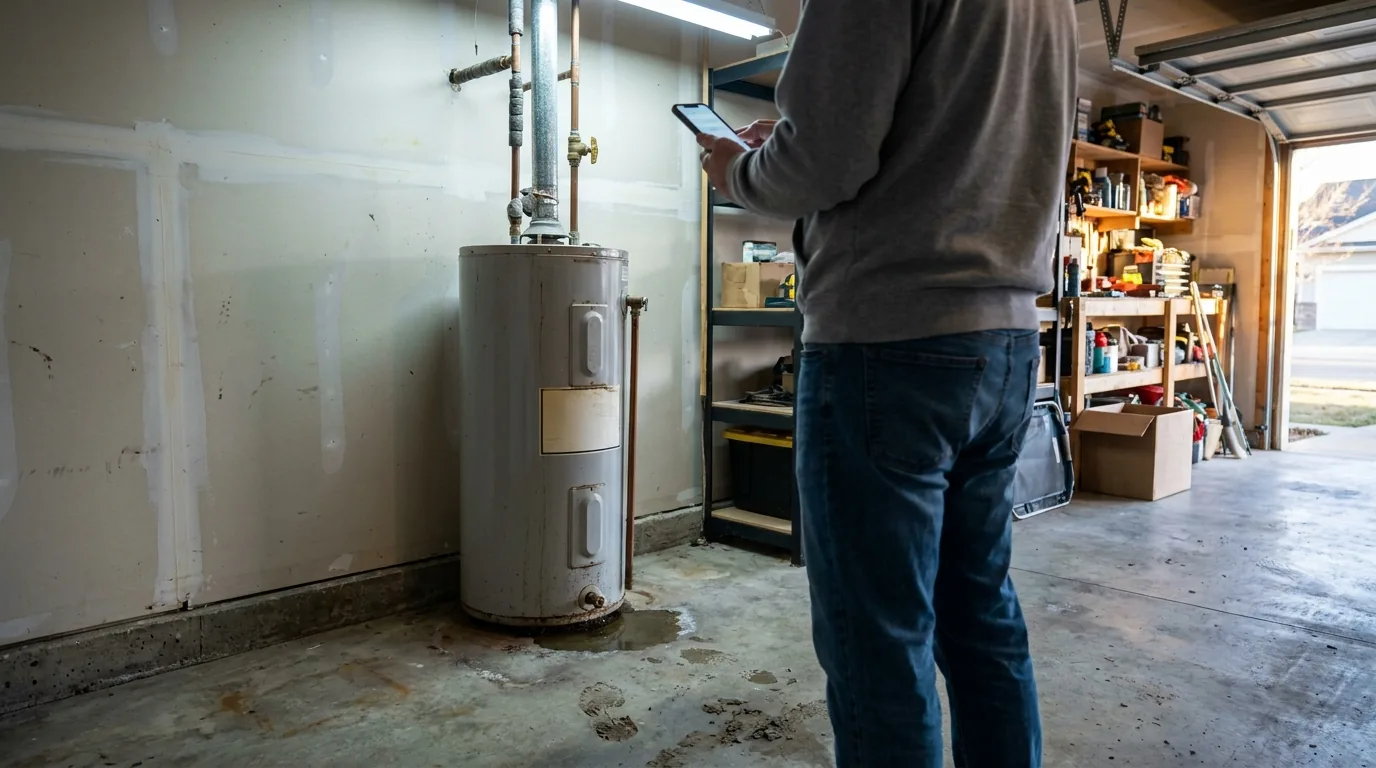
A homeowner with a leaking water heater used to get ten blue links. Now Google often writes the answer first, and plenty of people ask ChatGPT instead, so the question for an owner is whether that answer names your company.
What is generative engine optimization for home services?
Definition. Generative engine optimization (GEO) is the work of making a business easy for AI search tools, such as Google’s AI Overviews and AI Mode, ChatGPT and Perplexity, to find, understand and trust, so they can name or cite it when someone asks a question. Some marketers call the same work answer engine optimization (AEO).
It matters to any HVAC, plumbing, roofing or remodeling company whose customers start with a question instead of a company name.
How does GEO work?
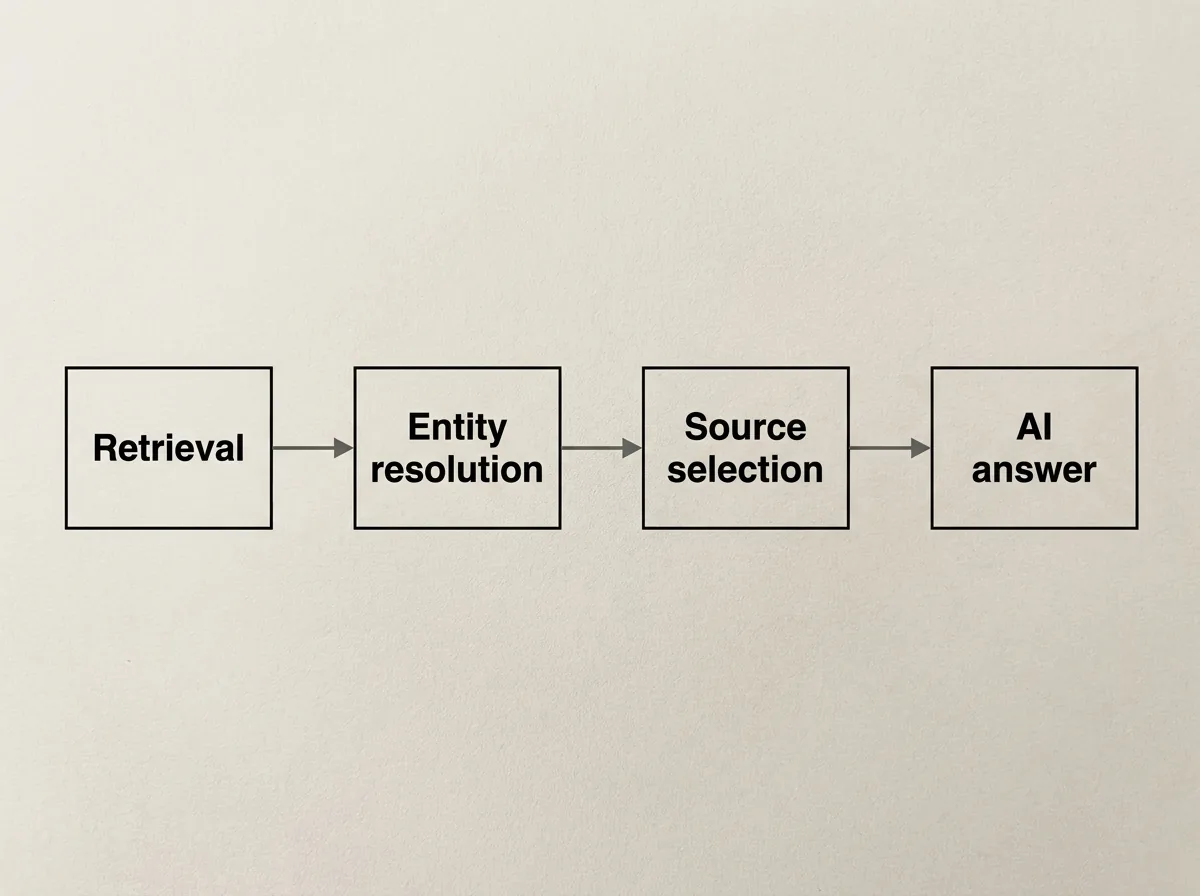
Google’s AI features sit on top of regular Search: to appear as a supporting link in AI Overviews or AI Mode, “a page must be indexed and eligible to be shown in Google Search with a snippet,” and “there are no additional requirements” (Google Search Central). Past that bar, three steps decide who gets named:
- Retrieval and query fan-out. Google says AI Overviews and AI Mode may issue “multiple related searches across subtopics and data sources” for one question (Google Search Central), and ChatGPT “rewrites your query into one or more targeted queries” for its search partners (OpenAI Help Center). Pros call this retrieval-augmented generation, or RAG: fetch pages first, write second.
- Entity resolution. The system works out which business you are from your name, phone, address, hours, service area and license. Google requires a profile name that reflects “your business’s real-world name, as used consistently on your storefront, website, stationery” (Google Business Profile guidelines).
- Source selection. The system keeps passages it can state with confidence. The paper that named GEO tested 10,000 queries and found that adding quotations, statistics and cited sources raised visibility in AI answers by up to 40%, while keyword stuffing did not help (Aggarwal et al., Princeton University and IIT Delhi, KDD 2024). For sites ranked fifth, citing sources lifted visibility by 115.1%, so a smaller company’s page can be quoted without the top spot. The study used general questions, not local ones. On a contractor’s page, “24-hour emergency service in these 12 towns, license number listed” gives a system something to quote; “quality service you can trust” gives it nothing.
What sources do AI tools use to mention local businesses?
Mostly sources other than your website. When Whitespark searched for Houston plumbers, Google’s AI Overviews cited 23 sources: 60% were third-party publishers such as Yelp, Thumbtack, HomeGuide, Reddit and Indeed, and 40% were individual local businesses (Whitespark, May 2025). Google says Business Profiles “can help your products and services to be visible in both AI responses and other Google Search results” (Google’s AI optimization guide). Perplexity puts “numbered citations linking to the original sources” on each answer (Perplexity Help Center), and ChatGPT search responses “may include citations” (OpenAI Help Center), so you can see which directory an answer leaned on.
When does GEO matter for a home service business?
GEO matters most while a homeowner is researching, less once they’re ready to call. Google describes AI Overviews as helping people “get to the gist of a complicated topic or question more quickly” and aims AI Mode at questions that need reasoning or complex comparisons (Google Search Central). Whitespark’s 540 searches across six local industries in Houston, Phoenix and Denver showed an AI Overview on 68% and a local pack on 39%, and the split by intent tells an owner where each one shows up (Whitespark):
| Intent | Example (our illustration) | AI Overview shown | Local pack shown |
|---|---|---|---|
| Local | “plumbers in Phoenix” | 15% | 93% |
| Informational | “how long does a water heater last” | 92% | 6% |
| Hybrid | “should I repair or replace my furnace in Denver” | 97% | 17% |
So the call-now search is still won in the map pack and Google Search Ads, while the repair-or-replace research days earlier happens in AI answers, where fewer people click: Ahrefs measured a 34.5% lower click-through rate for the top-ranking page when an AI Overview appeared, across 300,000 keywords (Ahrefs, April 2025).
Example: a fuzzy territory. A suburban HVAC company lists five towns on its website, ten on its Business Profile and a 60-mile radius on a contractor directory. Asked about emergency furnace repair in one of those towns, an AI tool finds three answers to where the company works, and a competitor whose sources agree gets named instead. The fix takes an afternoon: pick the eight towns the trucks really reach, inside Google’s limits of 20 service areas and a boundary that “shouldn’t be more than about 2 hours of driving time” from the base (Google Business Profile help), and list the same eight in all three places.
For a read on where you stand across ads, the map pack, organic results and AI answers, get your free Demand Gap Snapshot.
How can you check whether AI tools mention your business?
With a fixed prompt set run on a schedule, because answers shift with wording, location, time, device and whether you’re signed in.
- Write 10 prompts a customer would type: five urgent (“AC stopped working tonight in [town]”) and five research (“is a heat pump worth it in [town]”).
- Run all 10 in Google AI Mode, ChatGPT and Perplexity once a month, same wording, same order.
- Log the platform, date, assumed location, signed-in state, whether you were named, the sources cited, the competitors named and any wrong fact about you.
- Count the answers that named you and watch the trend, not any single result.
For the Google side, Search Console’s generative AI performance report shows how often links to your site appeared in AI Overviews and AI Mode, by page, device and country (Search Console Help). Its Search generative AI control can exclude a site from those features, and both reached every site worldwide as of August 31, 2026 (Search Console Help), so confirm nobody switched yours off.
The free Demand Gap Snapshot gives you a starting list of where your business is missing from Google’s results; it arrives by email in 60 seconds.

Common confusions about GEO
| People confuse | How to tell them apart |
|---|---|
| GEO and SEO | Same goal, new surface, and SEO is not dead: Google says “the best practices for SEO continue to be relevant” because its AI features “are rooted in our core Search ranking and quality systems” (Google’s AI optimization guide). The full comparison is in GEO vs SEO: What’s the Difference in 2025. |
| Ranking and being mentioned | SEO is judged on rankings and clicks, GEO on how often answers name you. A map pack leader can go unnamed in an AI answer, so track the two separately. |
What should you do first to get started with GEO?
Make your facts agree before you publish anything new:
- Google Business Profile: complete services, hours and booking details, and keep a single profile, since Google says there “should only be one profile per business” (Google).
- Listings: match name, phone, address, hours, emergency availability and license number on your site, Yelp, Angi, the BBB and trade directories.
- Service pages: state what you do, where, when and under which license, with photos and notes from your own jobs.
After that, the next decision is which AI surface to work on first, Google’s AI features or ChatGPT, since each has its own playbook.
Frequently asked questions
Can a local business guarantee a citation in Google AI Overviews or AI Mode?
No. Google says “there’s no way to request or pay for a better local ranking” (Google), and nobody controls which businesses an AI answer names. Treat any promise of guaranteed AI citations as a red flag.
How long does GEO take to show results?
In our LDC Framework work, the typical timing is first Google Ads calls in week one, the map pack in 30 to 60 days, organic results in 3 to 6 months, and AI answers with no promised date. Those are ranges, not promises.
How many reviews do I need, and should they mention the service and town?
Google says “more reviews and positive ratings can help your business’s local ranking” (Google), and reviews that name the job and the town give AI tools words to repeat, so ask customers to describe what you fixed. Never script or pay for them: Google treats incentives as “fake & misleading content” (Google), and the FTC’s 2024 rule bans incentives tied to a positive or negative review (FTC).
Will adding FAQ schema, LocalBusiness schema or an llms.txt file get my business cited?
Not by itself. Google says structured data “isn’t required for generative AI search,” there’s no special schema.org markup to add, and new “AI text files” are ignored by Google Search (Google). Schema still helps a machine read your hours correctly, so keep it valid with the Rich Results Test.
Should a local business create a separate page for every city it serves?
Only where the page adds something a homeowner there can use, such as permit rules, real response times or the housing stock you work on. Google says “creating separate content for every possible variation of how people might search” violates its scaled content abuse policy (Google), so start with the one or two towns that bring the most jobs.
What should I do when an AI answer says the wrong thing about my business?
Fix the sources it drew from. OpenAI warns that “search results and citations can be incomplete, outdated, or incorrect” (OpenAI Help Center), so open the cited pages, correct your profile and listings, and reply to any review that repeats the error. Keep dated screenshots of errors that recur.
How do I know whether GEO brought me a customer?
Ask “How did you find us?” on every call, add a source field to your CRM, and count through to closed jobs. Precision Patch Pros, a drywall company in Bakersfield we work with, tallied March 2026 that way: 26 leads, 22 proposals and 10 closes, $11,030 in sales from Google ads and organic search, over 36% of the month’s sales, and its owner, Sherman Burkhead, wrote that “these kind of leads are high closers and good margins.”
Researched and written with Sure Shot Cited, the AI article writer we built for our own client work, then reviewed by Ben Desjardins before it went live.